

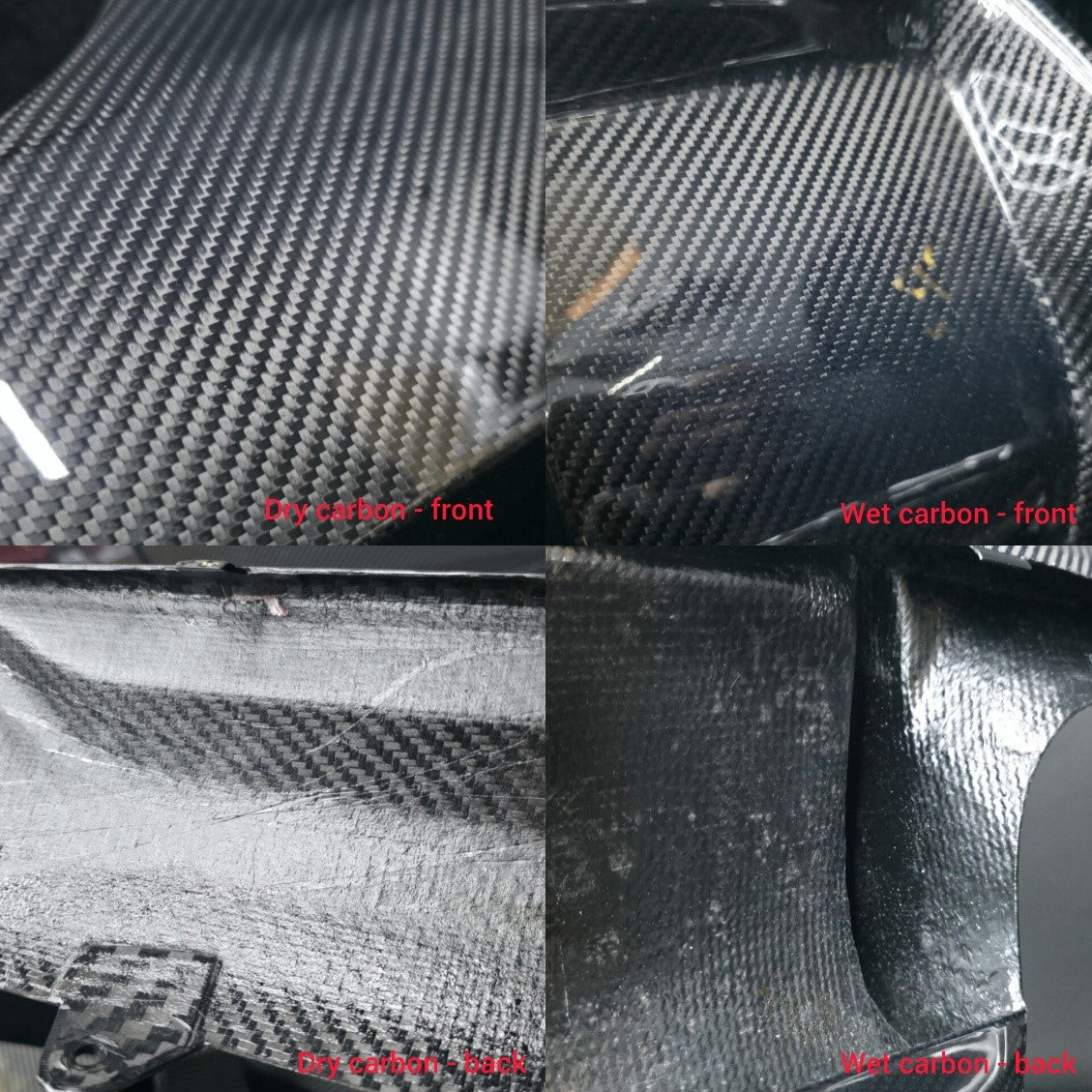
When you're looking to upgrade your car's look or performance with carbon fibre, you'll quickly come across terms like Wet Carbon and Dry Carbon. It can be confusing, but understanding the difference is key to making the right choice for your ride and your wallet.
Wet Carbon (Also Known as CFRP)
Let's start with the more common and often more affordable option.
What is it?
Wet Carbon gets its name from the manufacturing process. At Carbon Factory Limited, carbon fibre sheets are laid into a mould, and then a liquid resin is manually brushed or rolled onto the carbon fibre. It's a "wet" process because the resin is applied at the same time the part is being formed. These parts are then cured, often at room temperature or with minimal heat.
Think of it like: Painting a wall you apply the wet paint directly to the surface.
Key Characteristics of Wet Carbon:
- Affordable: Generally, much less expensive to produce.
- Good Aesthetics: Offers that classic carbon fibre weave look that people love.
- Heavier: Because the resin is applied by hand, there can be excess, making the final part heavier than dry carbon.
- Strength Varies: Quality can vary significantly depending on the manufacturer and their process. Too much resin makes it brittle; too little makes it weak.
- Often has Fiberglass Backing: To keep costs down and add bulk, many wet carbon parts use layers of fiberglass underneath the visible carbon fibre.
Wet carbon is a fantastic choice if you're primarily looking to enhance your car's visual appeal with the exotic look of carbon fibre without breaking the bank.
Dry Carbon (Also Known as Pre-Preg Carbon)
Now, let's look at the premium, performance-focused option.
What is it?
"Dry Carbon" is a much more advanced manufacturing process. Here, the carbon fibre sheets come pre-impregnated (or "pre-preg") with the perfect amount of resin already infused into the fibres by the factory. These pre-preg sheets feel dry to the touch. The sheets are then carefully laid into a mould, creating extremely precise parts. To cure, these parts are placed into a special oven called an autoclave under high pressure and heat. This process removes all air pockets and excess resin.
Think of it like: A factory-made composite material where every fibre is perfectly coated.
Key Characteristics of Dry Carbon:
- Ultra-Lightweight: It uses the absolute minimum amount of resin, making it significantly lighter than wet carbon – often 60% lighter or more!
- Extremely Strong & Durable: The autoclave process ensures a very dense, void-free, and incredibly strong final product.
- Superior Finish: Less prone to defects, yellowing, or cracking over time due to UV exposure, ensuring a lasting high-quality look.
- More Expensive: The specialized materials, precise process, and autoclave curing make dry carbon significantly more costly to produce.
- Pure Carbon Fibre: Typically, dry carbon parts are 100% carbon fibre, without any fiberglass backing.
Dry carbon is the ultimate choice if weight savings, maximum strength, and uncompromised quality are your top priorities. It's what you'll find on high-performance race cars and exotic supercars.
Quick Comparison: Wet vs. Dry Carbon
|
Feature |
Wet Carbon (CFRP) |
Dry Carbon (Pre-Preg) |
|
Manufacturing |
Manual resin application |
Factory pre-infused resin (pre-preg) |
|
Curing |
Room temperature or low heat |
High heat & pressure in an autoclave |
|
Weight |
Heavier (due to potential excess resin) |
Ultra-lightweight (minimal, perfect resin) |
|
Strength |
Good, but can vary; potentially brittle/weak |
Exceptional; incredibly durable and strong |
|
Cost |
More affordable |
Significantly more expensive |
|
Durability |
Can be prone to yellowing/cracking over time |
Highly resistant to UV, cracking, and degradation |
|
Typical Use |
Aesthetic upgrades, budget-friendly |
Performance parts, weight reduction, racing |
Conclusion
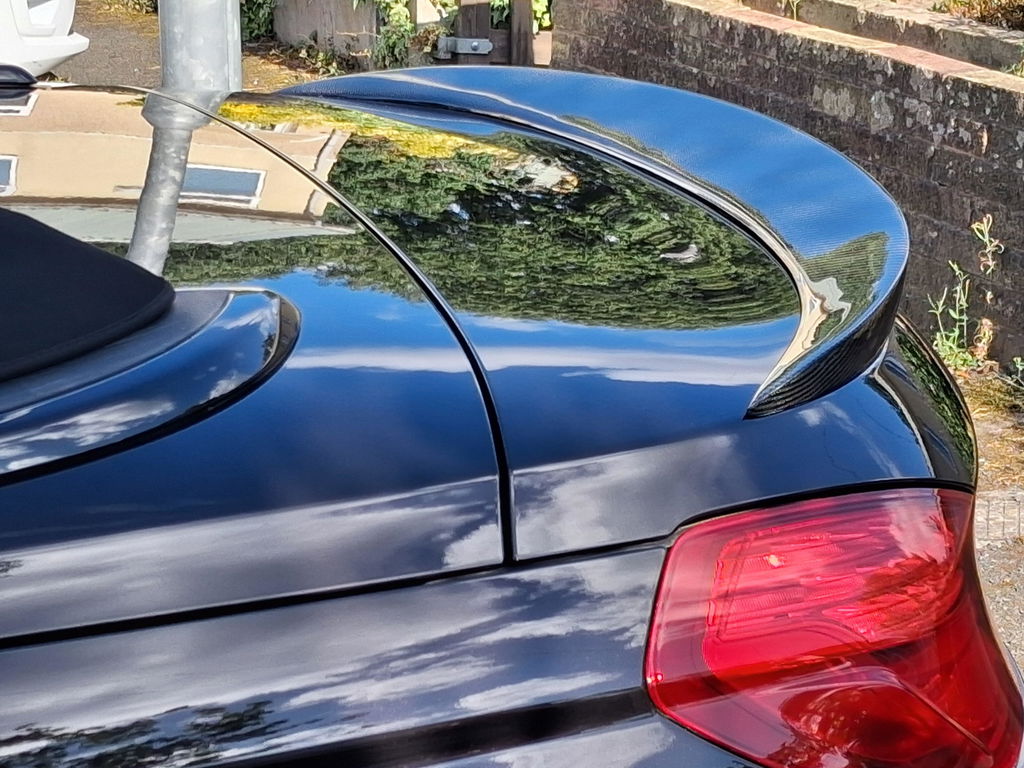
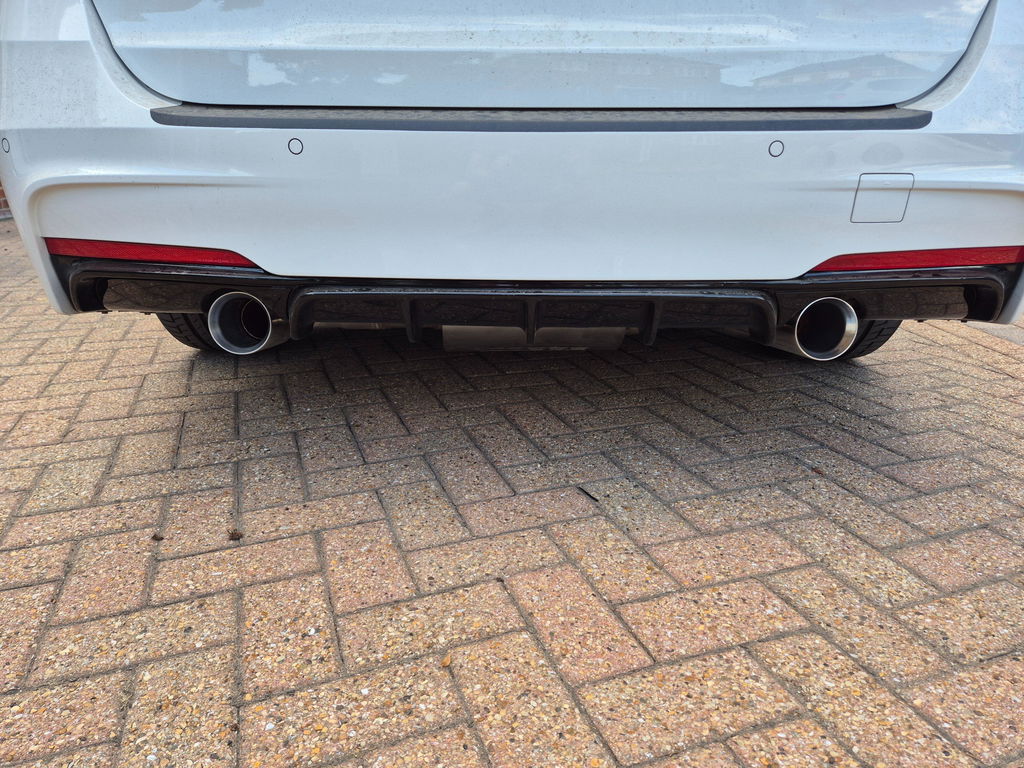
Choosing between wet carbon and dry carbon ultimately depends on your priorities for your car. Wet carbon (CFRP) is perfect if you want the iconic carbon fibre look at a more affordable price and aren’t overly concerned with weight savings or ultimate strength. On the other hand, dry carbon (pre-preg) is the premium choice for enthusiasts who demand maximum performance, extreme durability, and the lightest possible components just like on race cars and exotic supercars.
If you’re ready to upgrade your car with high-quality carbon fibre parts, contact us at Carbon Factory Limited to discuss the best options for your vehicle and get a personalized quote.
FAQ: Wet Carbon vs Dry Carbon
1. What is the main difference between wet carbon and dry carbon?
Wet carbon is made by manually applying resin to carbon fibre sheets, while dry carbon uses pre-impregnated (pre-preg) sheets cured under high heat and pressure for superior strength and lightweight performance.
2. Which is stronger: wet carbon or dry carbon?
Dry carbon is significantly stronger and more durable due to its precise manufacturing process and autoclave curing, while wet carbon strength can vary depending on resin application.
3. Is wet carbon or dry carbon lighter?
Dry carbon is much lighter, often 60% lighter than wet carbon, because it uses minimal resin and is free of excess material.
4. Why is dry carbon more expensive?
Dry carbon requires pre-preg materials, autoclave curing, and precise manufacturing, which makes it far more costly than the hand-laid wet carbon process.
5. Can wet carbon yellow or crack over time?
Yes, wet carbon parts are more prone to UV damage, yellowing, and cracking over time, especially if they include fiberglass backing. Dry carbon resists these issues and maintains its finish longer.




Leave a comment
This site is protected by hCaptcha and the hCaptcha Privacy Policy and Terms of Service apply.